SEA OF LOVE

2008–2016

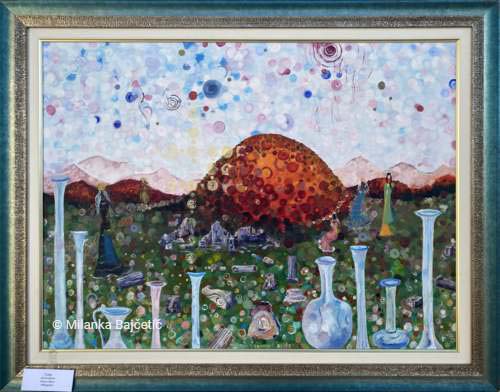
Doclea 2

oil on canvas, 80 × 100 cm, 2008

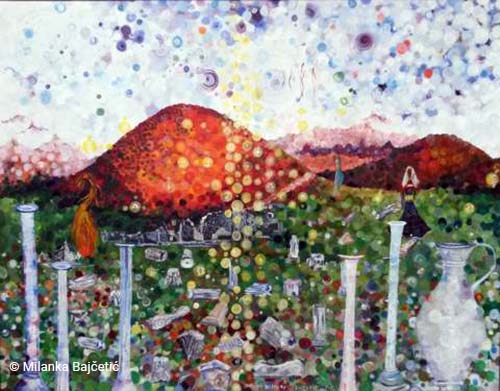
Doclea 1

oil on canvas, 70 × 90 cm, 2008

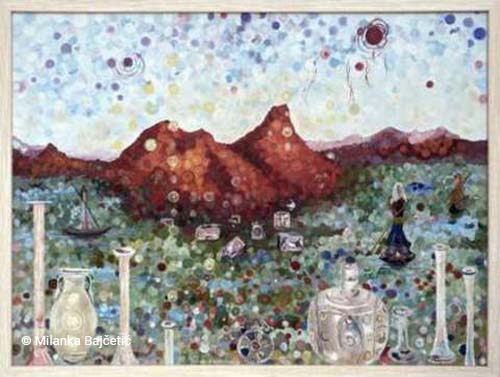
Skadar Lake 1

oil on hardboard, 50 × 70 cm, 2010–11

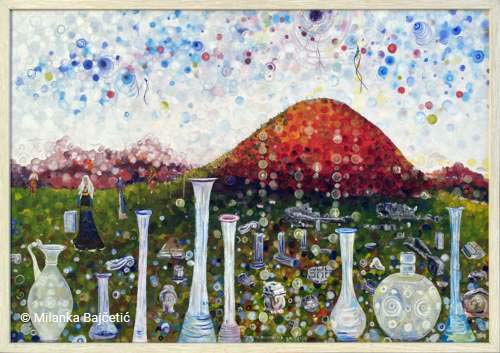
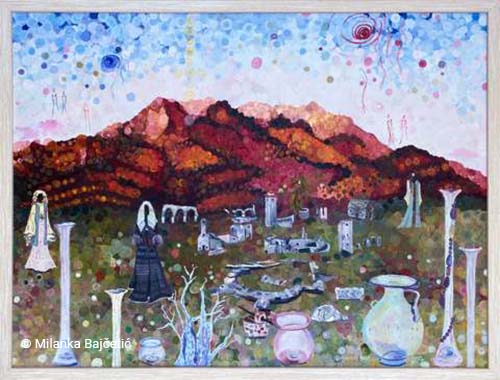
Doclea 4

oil on canvas, 60 × 80 cm, 2009

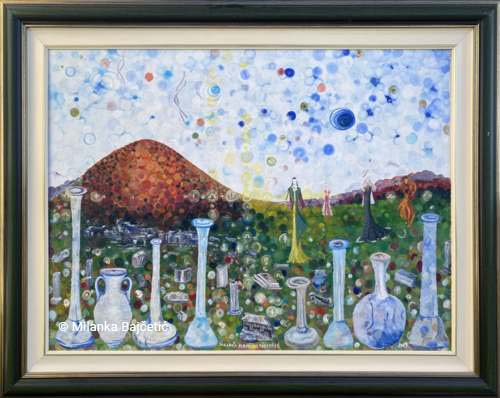
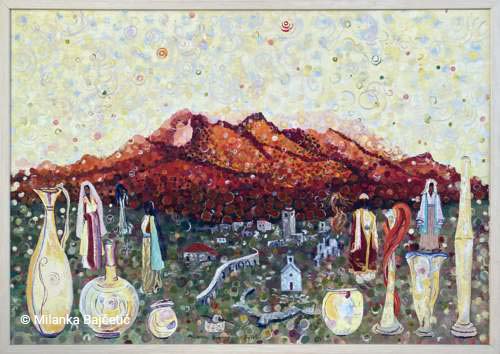
Doclea 3

oil on canvas, 60 × 80 cm, 2009

Skadar Lake 2

oil on canvas, 60 × 80 cm, 2011

Bar 1

oil on canvas, 60 × 80 cm, 2008

Bar 2

oil on canvas, 70 × 100 cm, 2011

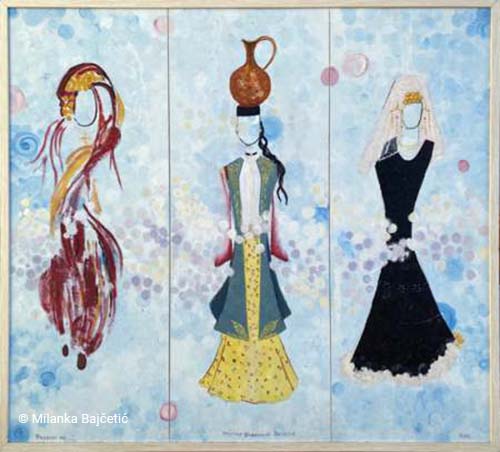
Take me down

oil on canvas, 3 × (100 × 40) cm, 2011

Non-governmental association Community of Croats and Friends - Montenegro, Podgorica, 2016

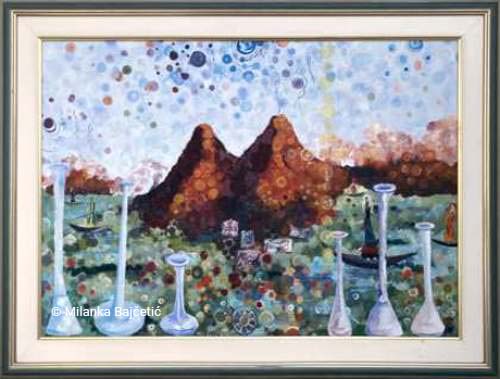
Paintings from the cycle “Sea of love” by Milanka Djuranovic Bajcetic are semantically multilayered, complex – in terms of content, specially on the relation past – present, traditional – (post)modern, national – multinational. Namely, the author has succeeded in portraying her love to multicultural Montenegro. By skilfully painting moves, in symbolically strong way, she is playing with the lavish geography and history of Montenegro, but also, with a woman principle and gender identity.

Female characters, through both aspects of its beign and sensibility, ennoble natural and social environment, giving to it over again a new life/ coexistence, and also by extracting its own vitality from it. Dynamics of the figures movement in folk costumes on paintings, its pristine and many centuries old connection with a mountains, sea, lakes, valleys, is almost tangible. This interaction is very deep, unbreakable in the anthropological sense, and fluid between them, although sprout in the past, is still alive, constructive, promising.


In the richnes of various natural, geometrical and other associative 
shapes, the impression is, that woman figures on Milanka’s paintings, so tall and elegant, are the best guide for a careful observer, through the past, present and future of Montenegro, with the apostrophe on its multicultural, multinational and multifunctional identity and continuity of the rich diversity. Also, the diversity of shapes, colours and compositions on the pictures intensifies clearly presented, intertwined configuration of (imaginary and real) relief of Montenegro, but also of arheological artifacts, usable objects, buildings from the various historical periods which are upgraded one on other through the centuries, and in which should be searched for the biggest potential in the actual moment, observed through meta-messages, which sends the author. Therefore, this multiplication and intersection of forms is exceptionally carefully chosen, subtly evoken, characteristically only to good connoisseur of (multi) national tradition and culture from this area in general, and, above all, to creative, playful artist what Milanka Djuranovic Bajcetic truly is.

Prof. dr Lidija Vujačić
Anthropologist
Podgorica, 28. May, 2016

SEA OF LOVE

2008-2016

Doclea 1

oil on canvas, 70 × 90 cm, 2008

Doclea 2

oil on canvas, 80 × 100 cm, 2008

Doclea 3

oil on canvas, 60 × 80 cm, 2009

Doclea 4

oil on canvas, 60 × 80 cm, 2009

Skadar Lake 1

oil on hardboard, 50 × 70 cm, 2010–11

Skadar Lake 2

oil on canvas, 60 × 80 cm, 2011

Bar 1

oil on canvas, 60 × 80 cm, 2008

Bar 2

oil on canvas, 70 × 100 cm, 2011

Take me down

oil on canvas, 3 × (100 × 40) cm, 2011

Non-governmental association Community of Croats and Friends - Montenegro, Podgorica, 2016

Paintings from the cycle “Sea of love” by Milanka Djuranovic Bajcetic are semantically multilayered, complex – in terms of content, specially on the relation past – present, traditional – (post)modern, national – multinational. Namely, the author has succeeded in portraying her love to multicultural Montenegro. By skilfully painting moves, in symbolically strong way, she is playing with the lavish geography and history of Montenegro, but also, with a woman principle and gender identity.

Female characters, through both aspects of its beign and sensibility, ennoble natural and social environment, giving to it over again a new life/ coexistence, and also by extracting its own vitality from it. Dynamics of the figures movement in folk costumes on paintings, its pristine and many centuries old connection with a mountains, sea, lakes, valleys, is almost tangible. This interaction is very deep, unbreakable in the anthropological sense, and fluid between them, although sprout in the past, is still alive, constructive, promising.

In the richnes of various natural, geometrical and other associative shapes, the impression is, that woman figures on Milanka’s paintings, so tall and elegant, are the best guide for a careful observer, through the past, present and future of Montenegro, with the apostrophe on its multicultural, multinational and multifunctional identity and continuity of the rich diversity. Also, the diversity of shapes, colours and compositions on the pictures intensifies clearly presented, intertwined configuration of (imaginary and real) relief of Montenegro, but also of arheological artifacts, usable objects, buildings from the various historical periods which are upgraded one on other through the centuries, and in which should be searched for the biggest potential in the actual moment, observed through meta-messages, which sends the author. Therefore, this multiplication and intersection of forms is exceptionally carefully chosen, subtly evoken, characteristically only to good connoisseur of (multi) national tradition and culture from this area in general, and, above all, to creative, playful artist what Milanka Djuranovic Bajcetic truly is.


Prof. dr Lidija Vujačić
Anthropologist
Podgorica, 28. May, 2016